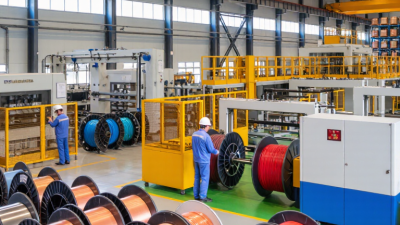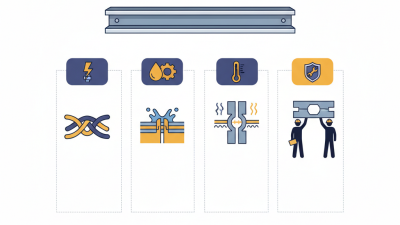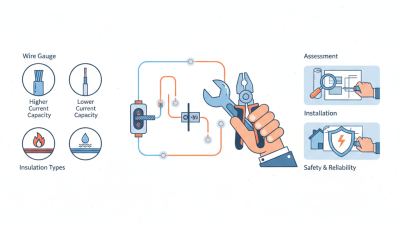
The difference between wire and cable seems simple, but practical work often proves otherwise. A wire usually contains one metallic conductor, either solid or stranded, with insulation for protection. A cable combines two or more insulated conductors, often inside an outer jacket. Think of a single copper lead behind a switch, compared with a thick power cable running through a factory tray. The boundary is not always tidy.
IEC 60228 provides an important technical reference by classifying conductors according to construction, flexibility, and resistance. However, manufacturers and regional standards may use “wire” and “cable” differently. That creates confusion for buyers searching terms such as wire cable wire. A reliable comparison must examine conductor count, insulation material, voltage rating, shielding, flexibility, and installation environment. Appearance alone is not enough.
The need for accurate selection is growing. The International Energy Agency reported in Electricity Grids and Secure Energy Transitions (2023) that more than 80 million kilometres of electricity grids must be added or refurbished worldwide by 2040. The agency also noted that annual grid investment needs to more than double by 2030. These figures highlight why cable performance affects safety, efficiency, and long-term maintenance. A smaller control wire may fit a sensor circuit, while a multi-core cable may serve industrial power distribution. Choosing incorrectly can create heat, voltage drop, or premature insulation failure. Even experienced teams should verify the specification. Terms evolve, and assumptions age.
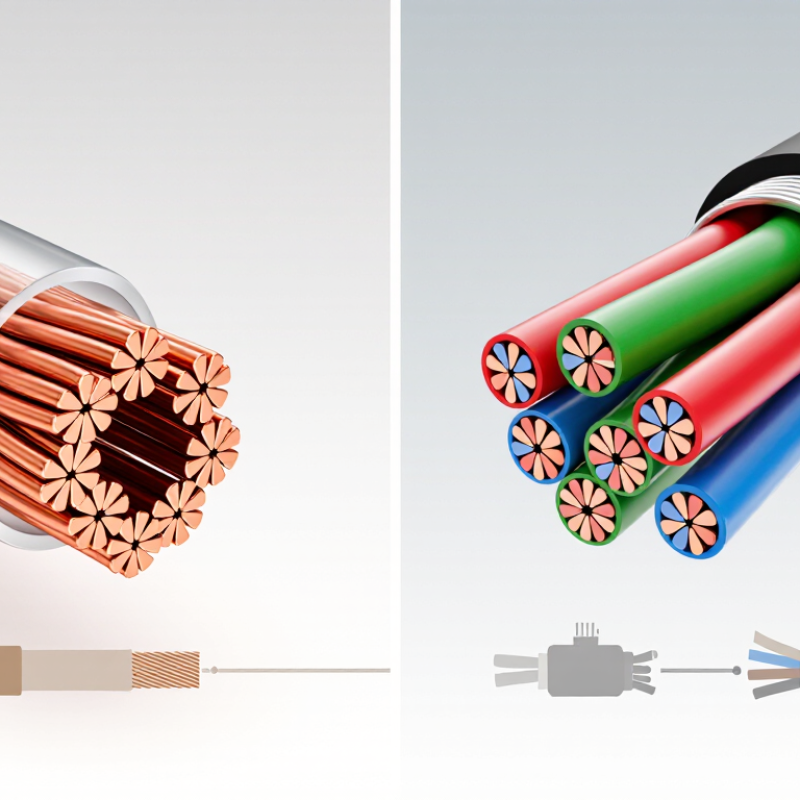
What Is the Difference Between Wire and Cable?
Definitions and Core Functions of Wires and Cables
A wire is usually one electrical conductor made from copper, aluminum, or another conductive material. It may have insulation, or it may remain bare for grounding and bonding applications. Its core function is simple: carry electrical current from one point to another. Solid wire offers stability in fixed installations. Stranded wire bends more easily.
A cable contains two or more insulated conductors, or sometimes optical fibers, grouped inside one protective structure. The conductors may carry power, signals, or both. An outer jacket can resist moisture, abrasion, heat, and chemical exposure. Some cables also include shielding, fillers, or a grounding conductor. This layered design improves organization and protection.
The boundary is not always tidy. In everyday trade language, people sometimes call a thick insulated conductor a cable. Technical documents may define it differently. During practical inspection, I check conductor count, insulation, shielding, voltage rating, flexibility, and installation conditions. Appearance alone can mislead. A small cable may carry sensitive data, while a larger wire may handle heavy current. The wrong choice can cause overheating, signal loss, or early insulation failure. I also question one common shortcut: thicker does not automatically mean safer. Length, temperature, load, and routing matter too. A careful specification should match the conductor or cable to its actual duty.
A wire usually contains one electrical conductor, either solid or stranded, covered by insulation. A solid wire behaves like a stiff metal thread. It suits fixed routes, such as a short connection inside a panel. Stranded wire bends more easily around terminals and tight corners. The conductor may use copper or aluminum, depending on the required conductivity, weight, and installation conditions.
A cable normally combines two or more insulated conductors inside one outer jacket. It may also include fillers, shielding, a moisture barrier, or armor. These layers control spacing, reduce electromagnetic interference, and protect against abrasion. Strip a typical power cable, and you may see several colored cores wrapped beneath a thicker sheath. The International Energy Agency’s Electricity 2024 report forecasts global electricity demand to rise by an average 3.4% annually through 2026. That growth increases demand for organized, protected conductor assemblies.
The distinction is not perfectly universal. Some standards describe a single-core product as a cable, while everyday installers may call it a wire. Context matters. IEC 60228 classifies conductors by construction and flexibility, showing why strand count affects handling and installation performance. In field work, a cable’s jacket can hide damage until testing reveals it. That is easy to overlook. Wire is generally simpler and more flexible to inspect, while cable offers better system-level protection. The correct choice depends on voltage, movement, heat, moisture, bending radius, and local code requirements.
A wire usually has one conductor, while a cable contains two or more insulated conductors. That physical difference changes electrical performance. A single wire often offers simpler routing and lower overall capacitance. A cable can carry power, signals, or both, but its conductors interact through capacitance and inductance. Shielding can reduce electromagnetic interference, though it may increase diameter and stiffness. A cable is not automatically better.
Conductor size controls resistance, heating, and voltage drop. NFPA 70, 2023 edition, Table 310.16, lists 14 AWG copper at 15 amperes and 12 AWG copper at 20 amperes under specified 60°C conditions. These figures are not universal promises. Ambient temperature, bundling, insulation rating, and installation space can reduce allowable current. IEC 60228 also classifies conductor flexibility and sets resistance requirements. In practice, a long cable may lose more voltage than a short wire, even when both use the same copper size. The U.S. Energy Information Administration reports that transmission and distribution losses commonly represent about 5% of electricity supplied, showing why resistance deserves attention.
Tips: Check voltage drop, not only ampacity. Measure the route length both ways. For signal cables, review impedance, capacitance, and shielding. A neat selection rule can still fail in a crowded conduit. I would verify the calculation against the applicable local code and the manufacturer’s test data.
The chart compares the resistance of a 10-meter copper wire conductor with the resistance of a 10-meter, two-conductor cable circuit. Values are calculated at 20°C using copper resistivity of approximately 0.01724 Ω·mm²/m.
A cable does not inherently have higher resistance than a wire made with the same conductor size. The cable value is higher here because a complete two-conductor circuit includes both the outgoing and return paths. Actual cable performance also depends on conductor size, length, temperature, insulation, shielding, and the number of conductors.
In electrical work, “wire” usually means one conductor. It may be solid or stranded. “Cable” normally contains two or more insulated conductors. A jacket binds them into one assembly. The boundary is not perfectly tidy. Some industries use both terms loosely. That distinction matters. Solid wire suits fixed panels and short, stable runs. Stranded wire bends better in machinery, vehicles, and control cabinets. Cable adds organization, shielding, or protection.
Common power cables include twisted-pair control cable, coaxial cable, and multicore industrial cable. Twisted pairs reduce electromagnetic noise in data and sensor circuits. Coaxial cable carries high-frequency signals through a central conductor and shield. Fiber-optic cable carries light, not electrical current. It fits long data links and electrically noisy sites. For buildings, nonmetallic-sheathed cable often serves concealed branch circuits. Armored cable helps where impact, moisture, or rodents are credible risks. “Looks stronger” is not a specification.
Selection should start with load current, voltage, temperature, routing, and bend radius. Conductor size controls ampacity and voltage drop. Insulation must match heat, chemicals, sunlight, and fire requirements. IEC 60228 defines conductor classes, but installation rules still depend on local codes. The International Energy Agency reported in Electricity Grids and Secure Energy Transitions that annual grid investment must exceed 600 billion dollars by 2030, roughly double current levels. The International Copper Study Group projected refined copper use above 26 million tonnes in 2024. Those figures indicate expanding demand, not automatic safety. A cable can be electrically adequate yet mechanically wrong. I have seen neat installations fail because the bend radius was ignored. Measure twice. Then question the drawing.
| Item | Definition | Typical Construction | Common Types | Typical Voltage or Signal Use | Practical Applications | Key Considerations |
|---|---|---|---|---|---|---|
| Wire | A single electrical conductor used to carry current or electrical signals. | One solid conductor or a group of fine strands, usually surrounded by insulation when required. | Solid wire; stranded wire; bare wire; insulated wire. | Ranges from low-voltage control circuits to power distribution, depending on insulation and construction. | Building circuits, control panels, grounding, internal equipment wiring, and electronics. | Generally simpler and more flexible to route individually, but it may require separate wires for complete circuits. |
| Cable | An assembly containing two or more insulated conductors, or one or more conductors with an overall protective covering. | Multiple insulated conductors may be combined with fillers, shields, binders, armor, or an outer jacket. | Power cable; control cable; data cable; coaxial cable; shielded cable; armored cable. | Used for power transmission, control signals, telecommunications, data communication, and audio or video signals. | Industrial machinery, building wiring, electrical distribution, networking, instrumentation, and outdoor installations. | Provides organized conductors and added mechanical or environmental protection, but is often thicker and less flexible than individual wire. |
| Solid Wire | A wire made from one continuous metal conductor. | One copper or aluminum conductor with optional insulation. | Insulated solid copper wire; bare solid grounding wire. | Common in fixed low- and medium-voltage wiring systems. | Residential branch circuits, fixed control wiring, terminal connections, and breadboards for low-current electronics. | Good electrical stability and easy termination; repeated bending can cause fatigue or breakage. |
| Stranded Wire | A wire formed from multiple small conductors twisted or bundled together. | Several metal strands enclosed by insulation when needed. | Flexible stranded wire; finely stranded wire; flexible equipment wire. | Commonly used in low-voltage, control, automotive, and equipment wiring. | Moving machinery, battery connections, control cabinets, appliances, test leads, and vibration-prone installations. | More flexible and resistant to vibration than solid wire; proper terminals or ferrules may be needed. |
| Twisted-Pair Cable | A cable containing pairs of insulated conductors twisted together to reduce electromagnetic interference. | Two insulated conductors per pair, often grouped under an outer jacket; may include shielding. | Unshielded twisted pair; shielded twisted pair; balanced-pair cable. | Primarily used for low-voltage data, voice, and control signals. | Ethernet networks, telephone systems, building automation, security systems, and industrial communication. | Twisting improves noise rejection; transmission distance and data rate depend on cable category and installation quality. |
| Coaxial Cable | A cable designed to carry high-frequency signals through a central conductor and a concentric shield. | Central conductor, dielectric insulator, conductive shield, and protective outer jacket. | Flexible coaxial cable; low-loss coaxial cable; shielded RF cable. | Radio-frequency, broadband, video, and antenna signals. | Television distribution, radio equipment, surveillance video, antennas, and measurement systems. | Offers effective shielding and controlled impedance; bending radius and connector quality affect performance. |
| Power Cable | A cable intended to transmit electrical power from a source to equipment or another distribution point. | One or more insulated conductors, often with fillers, a sheath, and sometimes shielding or armor. | Single-core power cable; multicore power cable; flexible power cable; armored power cable. | Low-, medium-, or high-voltage power systems, depending on design and insulation rating. | Industrial facilities, utility distribution, renewable-energy systems, buildings, and heavy equipment. | Conductor size, insulation temperature rating, voltage rating, installation method, and short-circuit capacity are critical. |
| Control Cable | A cable used to transmit control, monitoring, and instrumentation signals. | Multiple smaller insulated conductors, often numbered or color-coded, with an optional shield and outer jacket. | Multicore control cable; shielded control cable; flexible control cable. | Usually low-voltage control and signal circuits rather than primary power transmission. | Motor control centers, programmable control systems, sensors, relays, and industrial automation. | Shielding, conductor identification, flexibility, and separation from power cables help maintain signal integrity. |
| Shielded Cable | A cable that includes a conductive layer to reduce electromagnetic interference and limit signal leakage. | Insulated conductors surrounded by foil, braid, or a combination of shielding materials. | Foil-shielded cable; braided-shield cable; individually shielded multicore cable. | Low-voltage analog, digital, instrumentation, audio, and control signals. | Industrial sensors, medical equipment, audio systems, data acquisition, and areas with electrical noise. | Shielding is effective only when correctly terminated and grounded according to the system design. |
| Armored Cable | A cable with a metallic protective layer designed to resist mechanical damage. | Insulated conductors covered by metallic armor and an outer protective sheath when required. | Metal-armored power cable; interlocked-armored cable; continuously sheathed armored cable. | Common in power and control installations exposed to physical hazards. | Industrial plants, underground routes, outdoor installations, construction sites, and commercial buildings. | Provides strong mechanical protection; installation requires attention to grounding, bending radius, and cable glands. |
| Fiber-Optic Cable | A cable that carries information as pulses of light through optical fibers rather than electrical current. | Glass or plastic optical fibers, protective coatings, strength members, and an outer jacket. | Single-mode fiber; multimode fiber; indoor fiber cable; outdoor fiber cable. | High-speed data and telecommunications signals. | Internet backbones, data centers, telecommunications, industrial networks, and long-distance communications. | Provides high bandwidth and immunity to electromagnetic interference; requires careful handling and specialized termination. |
| Bare Grounding Wire | An uninsulated conductor used to provide a low-resistance path for fault current or static discharge. | Usually solid or stranded copper, aluminum, or another suitable conductive material without polymer insulation. | Bare copper grounding wire; grounding electrode conductor; bonding conductor. | Not intended for normal load-current transmission; used in grounding and bonding systems. | Electrical grounding electrodes, equipment bonding, lightning protection, and grounding grids. | Correct sizing, corrosion resistance, routing, and connection methods are essential for safety and code compliance. |
| Quick Comparison |
Wire = one conductor
Cable = two or more conductors or a protected conductor assembly
The exact meaning can vary by electrical standard and industry context, so conductor count, insulation, shielding, voltage rating, and installation conditions should always be verified before selection. |
|||||
A wire is usually one electrical conductor, either solid or stranded. A cable contains two or more insulated wires inside one protective jacket. This difference matters when planning an installation. A single wire suits simple connections, grounding paths, and short internal routes. A cable works better for power supplies, control systems, and data connections requiring several conductors together.
For fixed wiring behind a dry wall, solid wire can provide stable routing and reliable contact. Stranded wire bends more easily, making it practical for moving equipment, tight corners, and repeated adjustments. Choose cable when you need organized conductors and extra protection from abrasion, moisture, or heat. Check the conductor size, insulation rating, voltage rating, and installation environment before buying. A thicker conductor is not automatically safer. Poor terminals can still create heat.
Tips: Match flexibility to movement. Measure the route first. Leave a little service length. Inspect the jacket for cuts or flattening. For outdoor or damp locations, use construction rated for those conditions. Never guess the current requirement. Consult a qualified electrician when the load, temperature, or routing is uncertain.
In practice, I once preferred a compact cable for a crowded enclosure, then found its bend radius too large. The choice looked efficient but made maintenance awkward. That detail is easy to miss. Check the finished space, not only the electrical specifications.