Top Electrical Enclosure Manufacturers for Global Buyers
Choosing an Electrical Enclosure manufacturer is not a simple price comparison. Global buyers must examine material quality, ingress protection, thermal performance, customization, and delivery reliability. A polished catalog can hide practical weaknesses. Thin hinges, uneven powder coating, or poorly sealed cable entries may create costly problems after installation.
Rittal founder Friedhelm Loh has described the enclosure as “the heart of industrial automation.” This view remains useful. The enclosure protects controls, wiring, drives, and sensitive electronics from dust, water, impact, heat, and accidental contact. However, protection depends on the complete design. A strong cabinet can still fail when installers use unsuitable glands or leave unused openings unsealed.
This guide reviews leading manufacturers for international purchasing teams. It considers stainless steel, mild steel, aluminum, plastic, and modular enclosure systems. It also examines NEMA and IP ratings, cooling options, fabrication capacity, certification support, and regional service. These details matter in factories, renewable-energy sites, transportation projects, and outdoor infrastructure.
No ranking is perfect. Applications differ. A food-processing plant needs different protection from a roadside power cabinet. Budget pressure also changes the decision. The cheapest quotation may become expensive after corrosion, overheating, or replacement work. Buyers should request drawings, test information, sample units, and clear delivery terms before approving a supplier. Small checks matter. A reliable manufacturer should explain limitations, not only advertise strengths. This introduction provides a practical starting point for comparing established Electrical Enclosure manufacturers serving global buyers.
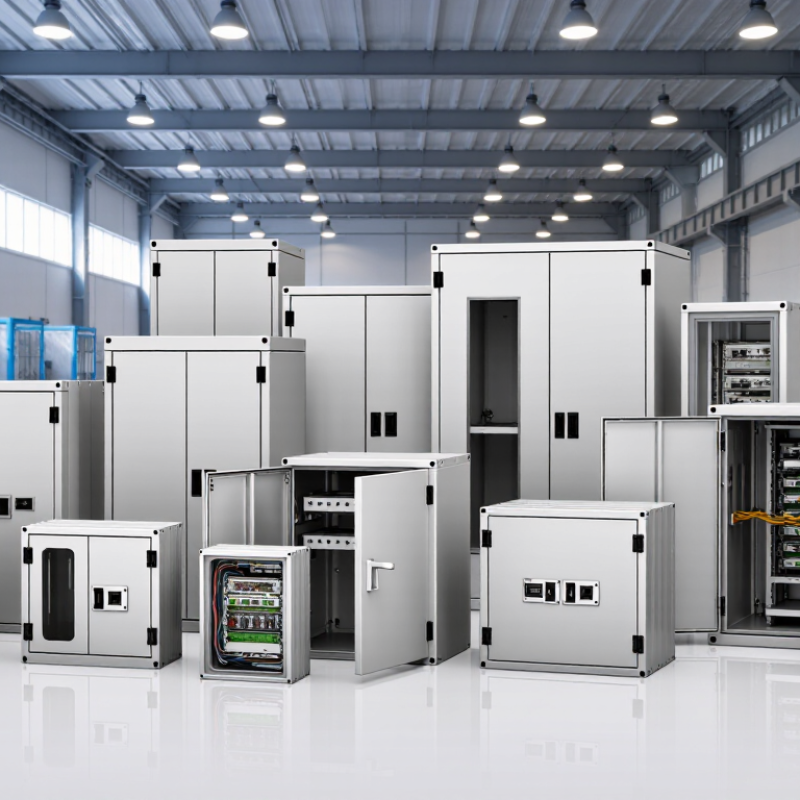
Electrical Enclosure Manufacturers: Industry Scope and Product Categories
Electrical enclosure manufacturers serve industries that need to protect electrical and control equipment from dust, water, impact, and temperature changes. Their work spans design, material selection, fabrication, finishing, and quality checks. Typical customers include utility operators, machine builders, process plants, and infrastructure contractors. The right enclosure depends on its location and the equipment inside, not just its dimensions.
Product categories vary by application. Wall-mounted cabinets suit compact controls in workshops, while floor-standing enclosures accommodate larger assemblies and cable management. Junction boxes protect connections at specific points.
Modular enclosures allow technicians to arrange panels and compartments as systems grow. Materials commonly include painted steel, stainless steel, and non-metallic composites; each brings different trade-offs in strength, corrosion resistance, weight, and cost. Details matter.
Buyers should compare ingress protection, operating temperature, door access, mounting options, and room for future wiring. A cabinet may look spacious on a drawing but feel cramped once cables and cooling components are installed. This is easy to miss. Ask manufacturers for dimensional drawings, material specifications, and test documentation relevant to the intended environment. Clear requirements help prevent mismatched products, though real installation conditions can still expose assumptions that need revisiting.
Key Standards and Certifications for Global Electrical Enclosure Suppliers
Top Electrical Enclosure Manufacturers for Global Buyers
Reliable electrical enclosure suppliers should show more than polished product photographs. They should identify the standards tested, the laboratory involved, and the exact enclosure configuration. IEC 62208 is widely used for empty low-voltage switchgear enclosures. It evaluates construction, insulation, mechanical strength, and resistance to heat. IEC 60529 defines IP ratings, such as IP65 or IP66, for protection against dust and water. The rating applies only under stated test conditions.
Regional requirements also matter. NEMA 250 classifications are common in North America, while IEC-based ratings dominate many other markets. These systems are not identical. A supplier should not present an IP rating as a direct replacement for every NEMA type. That shortcut causes trouble.
Ask for current test reports.
Material selection needs evidence. Stainless steel, coated steel, polycarbonate, and fiberglass each perform differently in coastal, chemical, or high-temperature environments. Look for corrosion-test data, coating thickness records, grounding details, and gasket specifications. For assemblies, IEC 61439 may apply after equipment is installed inside the enclosure. The empty box and the completed assembly can require separate verification.
ISO 9001 certification supports controlled production, but it does not prove product performance by itself. CE marking may involve several applicable directives and technical files, not one universal enclosure certificate. RoHS and REACH documentation can support restricted-substance compliance where required. In practice, documents sometimes conflict with drawings or labels. Suppliers should provide serial-level traceability and clear revision control. Buyers should still inspect samples. A certificate is useful, but never the whole answer.
How to Evaluate Electrical Enclosure Manufacturers and Their Capabilities
Global buyers should evaluate electrical enclosure manufacturers beyond catalog photos. A capable supplier explains material grades, ingress protection, corrosion resistance, and thermal performance clearly. Ask for test reports, dimensional drawings, and traceability records before approving samples. Reliable factories can show controlled welding, even powder coating, clean seals, and consistent door alignment. Their engineers should discuss cable entry, grounding, ventilation, and maintenance access. Experience matters when local standards differ across markets. Certifications should match the destination market and enclosure type.
Tips: Request one production sample, not only a showroom unit. Inspect hinges, locks, gasket compression, and mounting holes under practical conditions. Compare quoted lead times with recent delivery evidence. Check how defects are recorded and corrected. Fast replies help, but technical answers matter more.
Cost should include tooling, packaging, shipping protection, and after-sales support. A low unit price may hide weak coating or expensive rework. Review capacity honestly: machinery lists can look impressive, yet subcontracted processes may affect consistency. Request a factory audit, process flow, inspection plan, and sample approval record. Ask who owns technical decisions during urgent changes. No factory is perfect. A transparent supplier admits limits and proposes documented improvements. That honesty often matters more than polished sales language. Buyers should still verify every claim independently.
Common Electrical Enclosure Protection Levels for Global Buyers
A practical reference for comparing enclosure manufacturers against IEC 60529 ingress-protection requirements.
IP ratings are not a linear quality score. The first digit indicates protection against solid objects and dust, while the second digit indicates protection against water. Buyers should verify that the proposed enclosure has been tested in its actual configuration, including doors, gaskets, cable glands, locks, and mounting accessories.
Global Purchasing Factors: Customization, Quality, Logistics, and Support
Global buyers should evaluate electrical enclosure manufacturers beyond catalog size. A useful supplier can translate the installation environment into specific requirements: mounting method, cable entry locations, corrosion exposure, internal heat, and access for maintenance. Ask for dimensioned drawings, material and coating details, and evidence that the proposed enclosure meets the relevant ingress-protection rating. IEC 60529 defines the IP code, but the rating alone does not prove suitability for every outdoor or washdown condition. Check test scope and configuration. Small details matter. A door gasket compressed unevenly can undermine an otherwise sound design.
Customization is valuable when it solves a documented problem, not merely because it is available. Confirm prototype timing, change-control procedures, and how substitutions are communicated. Quality reviews should include inspection records and traceability for critical components; still, paperwork cannot replace checking a sample against the drawing. Logistics deserve equal attention. The United Nations Conference on Trade and Development’s Review of Maritime Transport 2024 reports that shipping carries over 80% of world merchandise trade by volume, making transit disruption a practical sourcing risk. Request packaging specifications, shipment milestones, and a clear process for damaged goods. Support counts after delivery, too. Ask who answers technical questions, how quickly replacement parts can ship, and whether documentation remains accessible. I would not assume the lowest quote is the best value; comparing total landed cost is harder, and sometimes the comparison is imperfect.