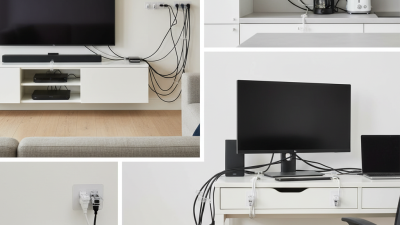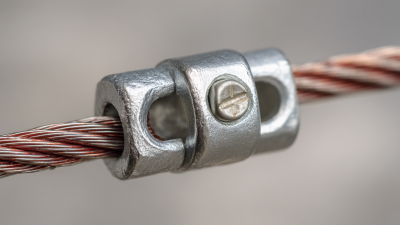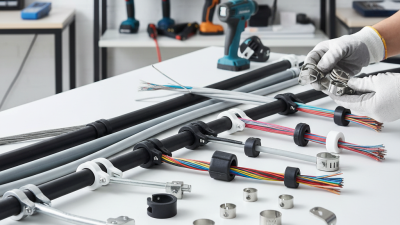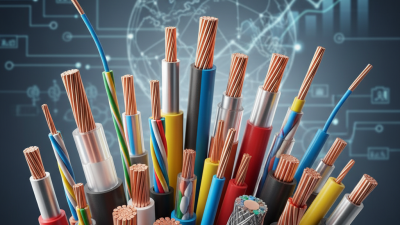
A cable clamp looks like a small component, yet it can determine whether a cable stays orderly, protected, and securely routed. In 2026, buyers will still encounter familiar designs, including P-clamps, cushioned clamps, U-bolts, saddle clamps, and adjustable clips. Each serves a different job. A P-clamp can hold a cable against a panel; a rubber-lined version helps reduce abrasion and vibration. A U-bolt suits heavier runs, but it can crush a jacket if tightened without care. Small details matter.
This guide compares leading cable clamp types by material, mounting style, load, and environment. It also considers installation access, cable diameter, temperature, moisture, and exposure to movement. Stainless steel may suit corrosive surroundings, while nylon clips can offer a lightweight option for indoor routing. Neither material is right for every use. Check product specifications, cable manufacturer guidance, and actual operating conditions before choosing. A neat appearance alone proves little. For critical runs, inspect the clamp after installation and during routine maintenance. This is easy to overlook. The best choice is not always the most expensive or strongest clamp; excessive pressure can damage insulation, while too little restraint allows rubbing and movement. Product names also vary between suppliers, so compare dimensions and rated performance rather than relying on labels alone. This overview offers practical selection criteria, not a substitute for application-specific engineering. Some installations remain awkward, and a table cannot capture every bend, edge, or vibration pattern. That limitation is worth remembering.
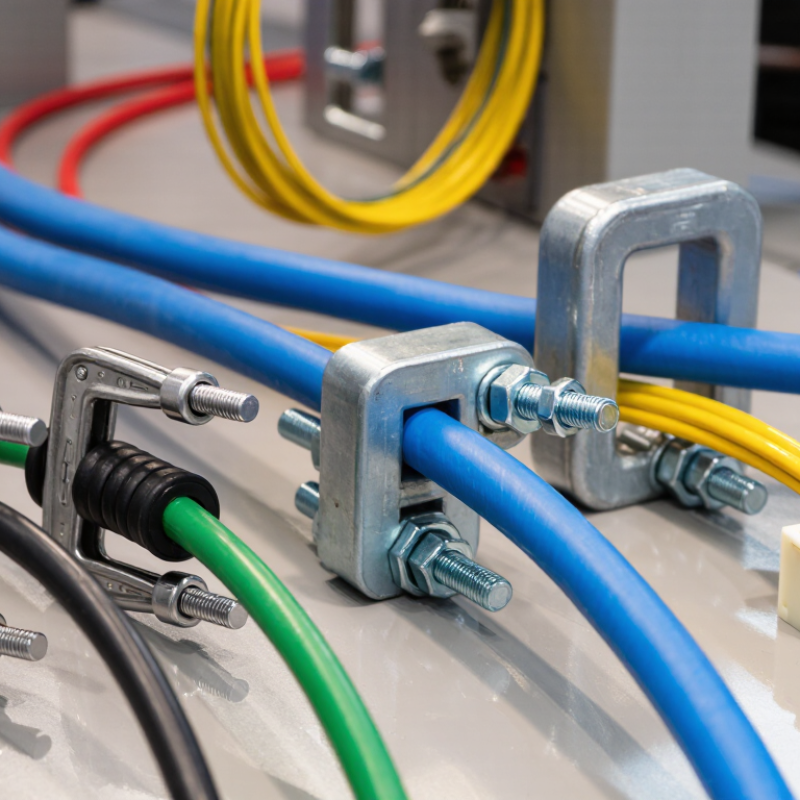
Cable clamps hold wires in place, guide their routing, and reduce movement near connection points. A clamp usually uses a screw, bolt, or snap-fit feature to press a cable against a surface. The contact should be firm, not crushing. Too much pressure can deform insulation; too little can let vibration rub the cable against a sharp edge. Fit matters.
Clamps are commonly classified by shape, mounting method, material, or function. Cushioned P-clamps wrap around a cable and help limit vibration. Saddle clamps secure cables against a flat surface, while snap-in clamps fit prepared openings.
Strain-relief clamps help reduce pulling at an entry point. Metal versions suit many demanding settings, while plastic options can be lighter and resist corrosion. These categories overlap in real installations, so the label alone does not confirm suitability.
Tips: Check the cable’s outside diameter, temperature range, and exposure to moisture or vibration. Inspect the clamp edge and fastener clearance before installation. Leave enough room for service access. A neat route can still be wrong if it bends the cable too tightly. Recheck after nearby equipment runs; vibration may loosen a fitting over time.
What Are the Top Cable Clamp Types in 2026?
Common Cable Clamp Types and Their Structural Differences
Cable clamps differ in how they wrap, support, and secure a cable. A P-clamp forms a loop with a flat mounting tab, often with a cushioned inner lining. It spreads contact around the cable and helps limit rubbing against a panel. A U-bolt clamp uses two threaded legs and a separate saddle. Its shape can grip larger cables or bundles, but tightening pressure needs care.
Saddle clamps hold a cable against a surface with a curved strap and one or two fasteners. They are simple to inspect, though they offer less enclosure than a full-loop clamp. Snap-in clamps use flexible tabs that press into a prepared hole. They suit lighter routing jobs, but hole size and panel thickness must match. Cable cleats, which often have two-piece bodies, are designed to restrain cables against movement; the right design depends on the expected load and installation conditions. Small parts matter. The trade-off is not always neat: a tighter clamp may hold firmly but can also deform insulation.
Tips: Check the cable’s outside diameter, clamp material, and mounting surface before installation. Leave enough room for bends, and avoid pinching the cable. If vibration is present, inspect fasteners and cushioning over time. Fit is not obvious. A sample installation can reveal clearance problems before a full run is secured.
Modern cable clamps balance grip, load, temperature, and corrosion resistance. Nylon clamps are light and electrically insulating, making them useful for indoor routing. Outdoor installations often need UV-stabilized polymer or stainless steel. In damp or chemically exposed areas, stainless hardware can resist corrosion, though grade selection still matters. No material wins everywhere.
Design details matter. A smooth, rounded saddle helps prevent jacket damage, while a rubber or elastomer liner can reduce vibration and rattling. Hinged clamps speed access during maintenance; cushioned P-clamps secure bundles against panels. Grand View Research valued the wider cable-management market at $23.15 billion in 2023 and projected an 8.5% annual growth rate through 2030. That figure covers more than clamps, but it signals rising demand for organized installations. For related cable-tie systems, IEC 62275 provides requirements for cable ties and their mounting devices; check the specific clamp’s temperature and load ratings separately.
Tips: Match the clamp to cable diameter, surface, and exposure. Tight is not always right. Leave room for expansion, and inspect edges for burrs. I’ve seen neat-looking runs fail because a clamp pinched the jacket; it is an easy detail to miss.
Polymer liners or clamp bodies can set the practical temperature limit: nylon 6/6 is common in saddle clamps, while P-clips often pair a metal band with a PVC, EPDM, or silicone lining. These ranges are indicative material service temperatures, not ratings for complete clamp assemblies; formulations and product specifications vary.
What Are the Top Cable Clamp Types in 2026?
Where Each Cable Clamp Type Is Commonly Used
P-clamps, often lined with rubber, hold individual cables on vehicles, machinery, and equipment frames. Their cushioning helps limit rubbing when engines or pumps vibrate. For outdoor runs, stainless-steel versions resist corrosion better than ordinary plated steel. Small details matter. A clamp that is too tight can still damage insulation.
Cable cleats secure larger power cables in substations, utility tunnels, and industrial switch rooms. They help keep cables positioned during routine service and fault-related mechanical forces. Choose a cleat designed for the cable diameter and installation conditions. IEA’s Electricity 2024 report estimated data-centre electricity use at about 460 TWh in 2022, potentially exceeding 1,000 TWh by 2026. More equipment means more cable runs, but neat routing alone is not enough.
Saddle clamps are common for conduit and fixed wiring along walls, ceilings, and machine enclosures. Adhesive-backed mounts suit light indoor bundles where drilling is impractical; heat, dust, or moisture can weaken their hold. Not always. In a server rack, for example, a screw-mounted clamp may be safer near warm exhaust than an adhesive pad. I still see mounting conditions underestimated: inspect the surface, cable weight, vibration, and maintenance access before choosing.
| Cable clamp type | Typical design | Where it is commonly used | Key strengths | Selection considerations |
|---|---|---|---|---|
| P-clamp (cushioned loop clamp) | A metal band forms a “P” shape around a cable; a bonded or fitted liner may cushion the cable. | Vehicle wiring, machinery, control panels, and equipment exposed to vibration. | Provides firm, organized support; a suitable liner can help reduce abrasion and vibration transfer. | Match the clamp diameter to the cable bundle and check temperature, moisture, chemical exposure, and mounting requirements. |
| Saddle clamp (two-hole clamp) | A curved metal or plastic strap holds a cable against a flat surface, typically with fasteners on both sides. | Building services, workshops, equipment frames, and general surface-mounted cable routes. | Simple to install and gives a stable, low-profile hold along walls, panels, or frames. | Use a size that supports the cable without pinching its jacket; select compatible fasteners and materials for the environment. |
| Cable cleat | A purpose-made device secures one cable or a cable arrangement to a support; designs may be single-cable or trefoil/multi-cable. | Power distribution, substations, industrial installations, and routes where cables need mechanical restraint. | Designed to hold cables in position; appropriately rated cleats can help restrain forces during short-circuit events. | Check cable arrangement, diameter, installation spacing, support structure, and applicable fault-force requirements. |
| Conduit strap clamp | A one-hole or two-hole strap holds electrical conduit to a wall, ceiling, or structural surface. | Residential, commercial, and industrial wiring installations where conductors run inside conduit. | Keeps the conduit route supported and orderly while protecting the enclosed conductors. | Choose the strap for the conduit type and outside diameter; follow local requirements for support and spacing. |
| Snap-in or hinged bundle clamp | A molded or hinged body closes around one or more cables and attaches to a panel, rail, or mounting point. | Control cabinets, appliances, electronics assemblies, and production equipment. | Allows quick installation and can make cable bundles easier to access during assembly or maintenance. | Confirm the bundle capacity, mounting method, closure security, and suitability for heat or vibration. |
| Nail-in cable clip | A small plastic or metal clip holds a cable against a surface and is fixed with an integral or separate nail. | Light-duty indoor routing on timber framing, skirting, or other suitable surfaces. | Inexpensive and fast to install for simple, low-load cable runs. | Use the correct clip size and avoid striking or crushing the cable; it is not a substitute for heavy-duty restraint. |
Selection note: Choose a clamp based on cable diameter, installation conditions, required mechanical restraint, and applicable electrical or building codes.
Choose the clamp by cable diameter, support load, environment, and fault exposure—not by appearance alone. Measure the cable’s outside diameter, including its jacket, then check the clamp’s stated range. Fit matters. An undersized clamp can damage insulation; an oversized one may let a cable shift during vibration. For outdoor or washdown areas, confirm material compatibility and the enclosure’s required ingress protection rating. IEC 60529 defines the IP code used to classify protection against dust and water.
For power cables, calculate the likely short-circuit forces and confirm the clamp’s tested rating and installation spacing. IEC 61914:2021 covers cable cleats and their short-circuit performance; a heavy-looking clamp is not proof of a suitable rating. Match the assembly to cable size, fault conditions, and support structure, and follow the manufacturer’s tested arrangement. Not just diameter. For lighter control wiring, a nylon snap-in clamp may be adequate indoors, while lined metal clamps can help limit abrasion or vibration. Check temperature, corrosion, and UV exposure before choosing materials. One detail is easy to miss: tightening harder does not create a better fit. It can crush the jacket, and site conditions rarely match a neat catalogue drawing.