Choosing the right power wire for global sourcing is not simply a matter of comparing prices or selecting the largest conductor. The decision affects safety, efficiency, installation time, and long-term product reliability. As electrical educator Mike Holt states, “The right conductor depends on the load, the distance, and the installation conditions.” This practical principle remains important across different markets and applications.
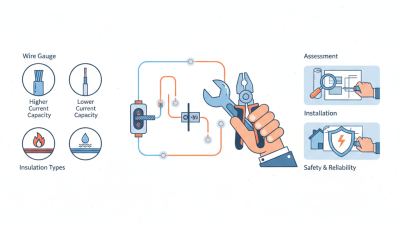
A reliable sourcing process begins with the electrical load. Confirm the required current, voltage, conductor material, cross-sectional area, and allowable voltage drop. Copper usually offers strong conductivity and flexibility, while aluminum can reduce weight and material cost. Both require careful engineering. Insulation also matters. PVC, XLPE, and silicone jackets behave differently under heat, moisture, movement, and chemicals. Check the temperature rating. Check the bending radius.
Small details can cause large failures.
Global buyers should request complete datasheets, traceable test reports, sample measurements, and relevant certification evidence. Requirements may differ between regions, so a wire accepted in one market may need additional evaluation elsewhere. Confirm markings, packaging, color codes, flame performance, and documentation before placing a large order. Factory audits and batch inspections add useful confidence, especially when specifications involve custom lengths or connectors.
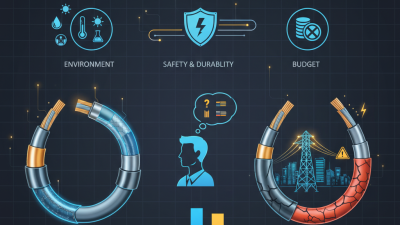
A polished catalogue can still hide inconsistency. I have seen low-cost wire become expensive after brittle insulation, unstable dimensions, or poor labeling caused installation delays. The better choice balances engineering performance, supplier capability, compliance, and total landed cost. Some uncertainty will remain. Good sourcing acknowledges it, tests it, and records the decision clearly.
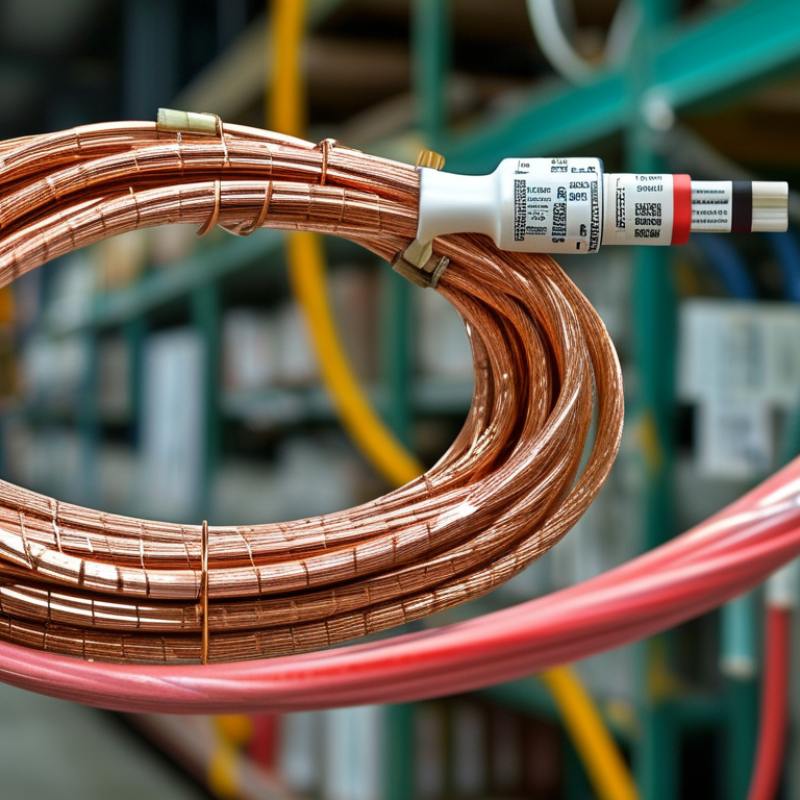
Choosing power wire starts with the application, not the price. A flexible cord for moving equipment needs fine-stranded copper and durable insulation. A fixed installation may use solid or stranded conductors with a protective sheath. Match conductor size to current, installation method, ambient temperature, and allowable voltage drop. Check voltage and frequency too. A 230 V circuit is not automatically suitable for a 120 V system. Small details matter.
Ratings must be read as a set. Confirm rated voltage, temperature range, flame behavior, bending class, and oil or moisture resistance. IEC 60227 covers many PVC-insulated cables up to 450/750 V, while IEC 60245 addresses rubber-insulated types at similar ratings. These references do not replace application testing. AWG sizing is common in North America, while metric cross-sectional area is widely used elsewhere. Conversion tables can mislead. Destination-country rules may add requirements beyond IEC references.
For global sourcing, request a current datasheet, construction drawing, test reports, and traceable batch information. Verify conductor resistance, insulation thickness, dielectric strength, and markings against the declared standard. Also confirm local approval requirements before shipment. A lower-cost wire can appear acceptable because its current rating looks adequate. That assumption is incomplete. Heat, routing, connectors, and ventilation can change the real margin. No datasheet answers every installation question. Ask for samples, bend them, strip them, and inspect the copper. Supplier claims are useful, but independent verification is safer.
Power wire selection depends on conductor flexibility, insulation, nominal voltage, environmental conditions, and the applicable international standard. The chart compares common European harmonized wire and cable designations by rated voltage.
H05 products are generally rated at 300/500 V, while H07 products are rated at 450/750 V. H05V-K and H07V-K are flexible PVC-insulated single-core wires commonly covered by IEC 60227-3. H05VV-F is a PVC-insulated flexible cable covered by IEC 60227-5, while H07RN-F is a heavy-duty rubber-insulated flexible cable covered by IEC 60245-4. The final selection must also verify conductor cross-sectional area, current-carrying capacity, installation method, temperature, mechanical stress, and local certification requirements.
How to Choose the Right Power Wire for Global Sourcing
Match wire specifications to voltage, current, and installation conditions. Voltage sets insulation requirements, while current determines conductor size. A wire rated for 600 volts may still overheat when its ampacity is too low.
The 2023 National Electrical Code, Table 310.16, lists 12 AWG copper at 20 amperes under the 60°C column and 25 amperes under 75°C conditions. These values assume specific installation temperatures and conductor arrangements. Do not copy them blindly. IEC 60364-5-52 commonly uses a 3% voltage-drop target for lighting and 5% for other circuits. Long cable runs need larger conductors, even when the load current appears modest. A 2.5 mm² copper conductor has a maximum resistance near 7.41 ohms per kilometer under IEC 60228 conditions. That resistance creates measurable voltage loss and heat.
Installation conditions can change the decision quickly. Bundled wires retain heat. Outdoor cables face moisture, sunlight, and wider temperature swings. Flexible equipment may need finer-stranded conductors, while fixed installations often use more rigid constructions. Check insulation temperature, bending radius, flame behavior, connector compatibility, and local certification requirements. I have seen sourcing teams select a cable from current alone, then discover excessive voltage drop during startup. A spreadsheet can mislead. Test the real route. Verify the worst case, including ambient heat and continuous load. Small savings in copper can become expensive rework.
Choosing power wire requires more than comparing price and diameter. Material selection affects conductivity, flexibility, heat generation, and service life. Copper usually offers stable conductivity and easy termination, while aluminum can reduce weight and cost. However, its joints need careful design and regular quality checks. I once treated insulation thickness as a simple quality signal. That was too narrow.
Insulation must match the working voltage, temperature range, and installation environment. PVC may suit controlled indoor applications, while cross-linked or elastomeric materials often perform better under heat, oil, vibration, or repeated bending. Check flame behavior, abrasion resistance, and cold-weather flexibility. A cable used near machinery should not crack after thousands of movement cycles. Connectors also deserve attention. Confirm the contact material, plating, locking method, and crimp range. A strong wire can still fail at a weak termination. Ask suppliers for dimensional records, batch traceability, and test reports for the destination market.
Tips: Test samples before approving production. Bend, heat, and pull them under realistic conditions. Inspect connector fit by hand, then verify it with measured force. Do not rely on photographs. Compare the datasheet with the actual sample. Environmental claims can be vague. Request clear test conditions and failure limits. Small details matter. One overlooked connector seal may allow moisture inside. I still review sourcing decisions after field feedback, because laboratory results cannot reproduce every installation mistake.
Choosing a power wire for global sourcing requires more than comparing price and conductor size. Verify the supplier’s legal entity, factory address, production scope, and certification records. ISO’s Survey 2023 reported more than 1.26 million ISO 9001 certificates worldwide. However, ISO 9001 confirms a management system, not automatic wire performance. A certificate can still hide a weak batch.
Request test reports for conductor resistance, insulation resistance, dielectric withstand, dimensions, flexibility, and flame performance. Match every result with the applicable market standard, such as IEC 60228, IEC 60502-1, or IEC 60332. Confirm the laboratory’s accreditation and test date. Sampling matters. A report from three years ago may not represent today’s material. I would also compare copper purity, insulation compound, gauge, and temperature ratings against the approved sample.
Tips: Ask for a batch number on each carton, reel, and test report. Require photographs of production labels and sealed samples before shipment. Keep purchase orders, inspection records, and shipping documents together. UNCTAD reports that more than 80% of global merchandise trade moves by sea, so traceability must survive long transport and multiple handoffs. The World Bank’s Logistics Performance Index 2023 also treats tracking and tracing as a distinct supply-chain capability. Do not rely on paperwork alone. Conduct pre-shipment testing when the application is safety-critical. Shortcuts are tempting. They are also difficult to defend after failure.
Choosing a power wire for global sourcing requires more than comparing the purchase price. Conductor material, insulation type, gauge, and connector design affect the total cost. Freight also changes the calculation. Heavy reels may reduce unit pricing but increase ocean or air shipping charges. Customs documents, testing records, and destination-specific markings can add further expenses.
Tips: Request a landed-cost quotation. Include tooling, packaging, duties, inspection, and delivery. Confirm whether the supplier can provide traceable material certificates. Compare carton dimensions, not only wire length. Small details matter.
Compliance risks deserve equal attention. The required safety standard may differ between markets, so verify voltage ratings, temperature limits, flame performance, and labeling before production. In my sourcing reviews, missing paperwork has caused more delay than technical defects. I once focused too heavily on conductor pricing and underestimated repacking costs. That was a useful mistake. A compliant wire can still create trouble if its documents are incomplete or its packaging fails transport conditions. Ask for samples, review test reports independently, and record approval criteria in the purchase agreement. Shipping plans should also reflect humidity, vibration, storage time, and seasonal congestion. Sometimes the cheapest route is not the safest one.
| Power Wire Option | Typical Conductor | Common Voltage Range | Typical Application | Relative Material Cost | Compliance Considerations | Shipping and Storage | Risk Level | Best-Fit Sourcing Scenario |
|---|---|---|---|---|---|---|---|---|
| PVC-Insulated Copper Wire | Annealed copper, solid or stranded | Usually up to 450/750 V, depending on construction and approval | General internal wiring, control panels, appliances, and low-voltage equipment | Medium to high; copper represents most of the conductor value | Verify insulation temperature rating, flame performance, conductor size, and destination-market requirements. Applicable standards vary by country and end use. | Flexible and relatively compact. Protect from sharp edges, excessive heat, moisture, and prolonged UV exposure. | Medium | Projects requiring good conductivity, broad availability, and straightforward fabrication |
| XLPE-Insulated Copper Cable | Stranded copper, often compact or sector-shaped in larger sizes | Commonly 0.6/1 kV in low-voltage power systems | Industrial distribution, renewable-energy systems, infrastructure, and demanding thermal environments | High; conductor cost is high and XLPE construction may increase processing cost | Check rated conductor temperature, short-circuit performance, fire behavior, electrical testing, and local installation rules. | Heavier and less flexible than small PVC wire. Use suitable reels, bending-radius controls, and moisture protection. | Medium | Applications needing higher thermal capability and improved electrical performance |
| Aluminum Power Cable | Stranded aluminum, sometimes compacted | Commonly used in low- and medium-voltage distribution systems | Utility distribution, large feeder circuits, and projects where weight reduction is important | Low to medium; aluminum is generally less expensive and lighter than copper by weight | Confirm allowable ampacity, connector compatibility, oxide-control requirements, thermal expansion provisions, and local code acceptance. | Lower mass can reduce freight cost, but larger conductor volume may require more reel space. Prevent mechanical damage and contamination at terminations. | High | Long-distance distribution where lower weight and material cost outweigh termination complexity |
| Rubber-Insulated Flexible Cable | Fine-stranded copper | Often 300/500 V or 450/750 V, depending on cable type | Portable equipment, construction tools, industrial machinery, and repeated-flex applications | Medium to high; fine stranding and flexible compounds increase cost | Review oil resistance, abrasion resistance, flexing classification, flame behavior, temperature range, and relevant cord or cable standards. | Flexible but can be bulky. Avoid tight coiling, compression, ozone exposure, and prolonged sunlight unless specifically rated. | Medium | Equipment that moves frequently or operates in harsh industrial environments |
| Solar Photovoltaic Cable | Tinned or bare stranded copper | Commonly rated up to 1.0/1.5 kV DC, depending on cable design | PV module interconnections, outdoor DC wiring, and photovoltaic arrays | Medium to high; UV-resistant insulation and specialized construction add cost | Require verification of UV resistance, outdoor durability, DC voltage rating, temperature rating, flame performance, and connector compatibility. | Suitable for reels or coils. Keep dry and protected from sunlight, chemicals, and crushing during container transport. | High | Outdoor solar projects with long service-life and environmental-exposure requirements |
| Low-Smoke Zero-Halogen Cable | Stranded copper, with halogen-free insulation and sheath compounds | Often 300/500 V or 0.6/1 kV, depending on design | Public buildings, transport facilities, data centers, and restricted-smoke environments | High; specialty compounds and testing can increase unit cost | Confirm low-smoke and halogen-free test results, flame-spread performance, smoke density, toxicity requirements, and project specifications. | Usually heavier or less flexible than basic PVC alternatives. Protect from moisture and deformation during storage. | High | Safety-critical buildings where smoke and corrosive-gas reduction is required |
| Armored Power Cable | Copper or aluminum conductor with metallic armor | Commonly 0.6/1 kV for low-voltage power distribution | Buried routes, industrial sites, outdoor feeders, and areas requiring mechanical protection | High; armor adds metal weight, manufacturing steps, and handling cost | Check armor type, earthing requirements, impact protection, cable-gland compatibility, fire performance, and installation method. | Heavy and space-intensive. Requires strong reels, lifting equipment, protected edges, and accurate freight-weight calculations. | High | Projects where mechanical protection may reduce trenching, conduit, or maintenance costs |
| Flat Parallel Power Cable | Multiple stranded copper conductors in a flat PVC or elastomeric assembly | Often 300/500 V or 450/750 V, depending on construction | Appliances, lighting equipment, machinery, and space-constrained internal wiring | Medium; assembly geometry can improve installation efficiency but limits customization | Verify conductor identification, spacing, insulation rating, bend limitations, flame performance, and approval requirements for the target market. | Efficient use of space when packed correctly. Avoid sharp folds, torsion, and excessive stacking pressure. | Medium | High-volume equipment wiring where rapid assembly and compact routing are priorities |
Cost categories are relative planning indicators rather than quotations. Final landed cost should include conductor metal pricing, insulation and armor, tooling, testing, certification, packaging, inland transport, freight, insurance, duties, taxes, and destination handling. Voltage ratings and compliance requirements must be confirmed against the applicable national code, product standard, installation method, and end-use environment before purchase.